Going to Japan? Learn Katakana First!
The step-by-step workbook that gets you reading menus, signs and train stations before your trip. No Japanese needed to start.
168 pages · numbered stroke order · real travel words · answer key
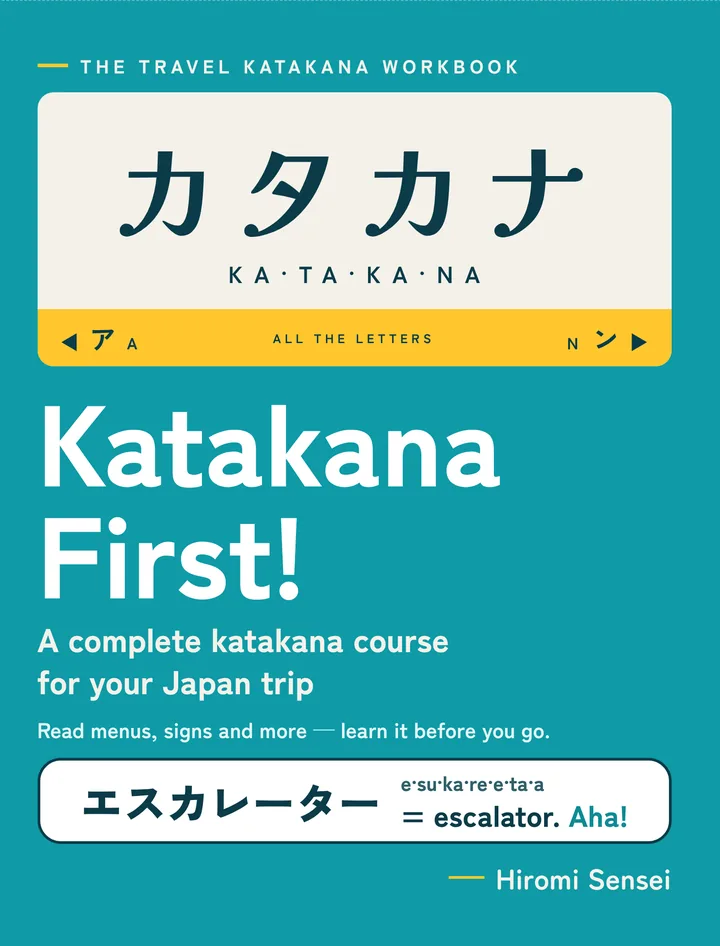 Workbook
by Hiromi Sensei
The fastest way to read katakana
Games are fun, but they can’t teach your hand to write, and writing each letter by hand is what helps it stick. So start with the workbook, then use the games on this site to review.
- 1Learn and write with the workbook
Trace and write every letter with numbered stroke order. Writing by hand is what makes katakana stick.
- 2Read real travel words
Menus, stations, hotels and shops: the workbook is full of words you will actually see in Japan.
- 3Check yourself with the free games
Use the games on this site to review and test what you learned. They are made to go with the book.
Why learn katakana first?
Japanese has three kinds of writing: hiragana, katakana and kanji. For a traveler, katakana gives you the most reading power for the least study.
Words you already know
Most katakana words come from English: hotel, taxi, coffee. Read the sounds, and the meaning jumps out.
Everywhere on your trip
Menus, train stations, shops and signs are full of katakana. It is the writing you will see most as a traveler.
Only 46 basic letters
Each letter has just one sound, and the shapes are simple. With a little practice every day, you can read them sooner than you think.
Useful from day one
Hiragana really helps once you learn grammar. Katakana helps you right away: you can order, shop and find your way.
Katakana First!
Not just a textbook. A workbook!
Remember katakana for your trip by writing it and reading it.
The katakana workbook made just for English speakers going to Japan. Learn faster and have more fun, with no Japanese needed to start.
- Built on how Japanese really sounds. Sound changes, beats and rhythm are explained step by step, so every letter makes sense.
- Only words you will really see. Every word comes from travel: hotels, train stations, menus and shops.
- That “Aha!” moment. Sound out コーヒー, and suddenly you hear “coffee.” It sparks joy!
- Real, modern Japanese. Short forms like スマホ (smartphone) and エアコン (air conditioner): the katakana people use every day.
- Made for English speakers. Every explanation starts from the English sounds you already know.
- Tips from an experienced teacher. Learn how to study, not just what to study.
- Practice until it feels easy. Fold-and-read pages give you plenty of reading practice, until you read smoothly.
- Mini tests and games. Check yourself, then have fun with a crossword, sudoku, word search and a Japan map.
Paperback · 168 pages · 8.5 × 11 in · answer key, mini dictionary and a full katakana chart
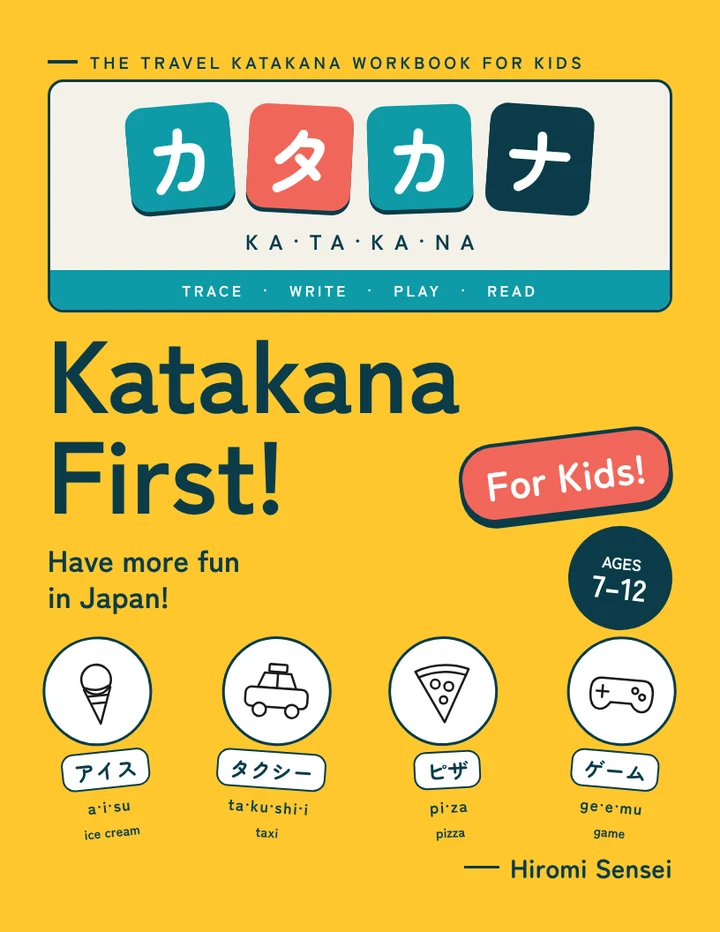
Katakana First! For Kids
Ages 7 to 12 · Have more fun in Japan!
The kids’ workbook in the same series. Your child traces, writes and plays with every letter, then reads it for real in Japan: on menus, signs and snack packages.
- Kid-friendly words. Ice cream, pizza, unicorns and arcade games. No beer or wine here!
- Trace, write and play. Mazes, word searches, coloring, a secret code, a crossword and manga sound words.
- Sounds made easy. Every letter comes with a simple tip, like “kah” as in car (not cat!).
- Fun facts about Japan. Capsule toys, convenience-store snacks, Japanese schools and more. Grown-ups will learn something, too.
- My Japan Journal. Bingo cards, a snack taste test and I spy pages to fill in on the trip.
- A help page. Point-and-show phrases, plus space for hotel and family contact information.
Paperback · 110 pages · 8.5 × 11 in · for ages 7 to 12 (younger kids can enjoy it with a grown-up)
Free materials and games for workbook learners
Hear the letters, watch the strokes, and check what you learned with games. They work best side by side with the workbook.
Watch each letter being written, one stroke at a time.
Sound ChartTap any letter on the chart to hear how it sounds.
カ→kaLetter MatchSee a letter and pick its sound. Watch out for look-alikes!
Hat CatchHats are falling! Catch the one that matches the sound on your basket.
トマト→tomatoRead it! Guess it!Read a katakana word and type it in English. Hints help you get there.
Speed Sign ChallengeRead signs and menus as fast as you can in 60 seconds.